
What is inside your watch?
Beneath the dial is the movement: the mechanism that makes your watch run. Its energy may come from a mainspring or a battery. That difference determines how it works and what care it needs.
Explore the main movement types, escapements and complications, from the familiar hand-wound movement to unusual historical designs.
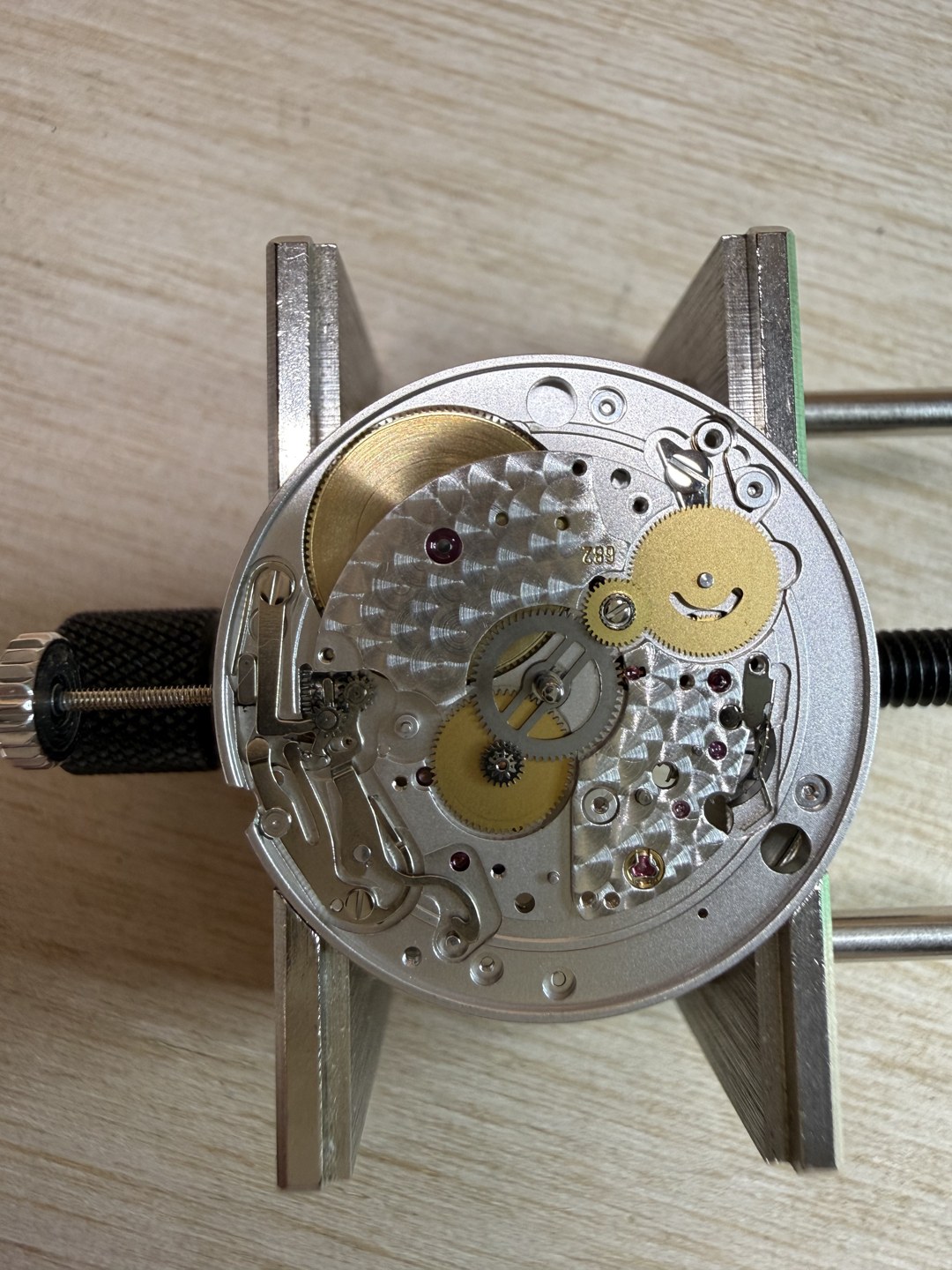
The three main movement types
An automatic is a mechanical movement with automatic winding. Both hand-wound and automatic movements use a mainspring.
Hand-wound
Turning the crown winds the mainspring. As it slowly unwinds, the gear train transmits its energy. The escapement and balance regulate its release in small steps. A hand-wound movement does not need a battery.
Examples: Omega Speedmaster Professional with a hand-wound calibre, vintage Longines and hand-wound versions of the Patek Philippe Calatrava.
Automatic
An automatic is also a mechanical movement. A moving weight, the rotor, uses wrist motion to wind the mainspring. The timekeeping mechanism works on the same principle as a hand-wound movement. Whether crown winding is also possible depends on the calibre.
Examples: Rolex Submariner, Seiko 5 and many watches with ETA or Sellita movements; some designs use a micro-rotor.
Quartz
A battery supplies an electronic circuit with a quartz crystal. The crystal’s oscillation provides the time reference. In an analogue quartz watch, a motor drives the hands. A quartz watch therefore also has moving parts that may need attention.
Examples: Many modern and vintage watches, including models with quality quartz calibres from makers such as Ronda, ETA and Seiko.
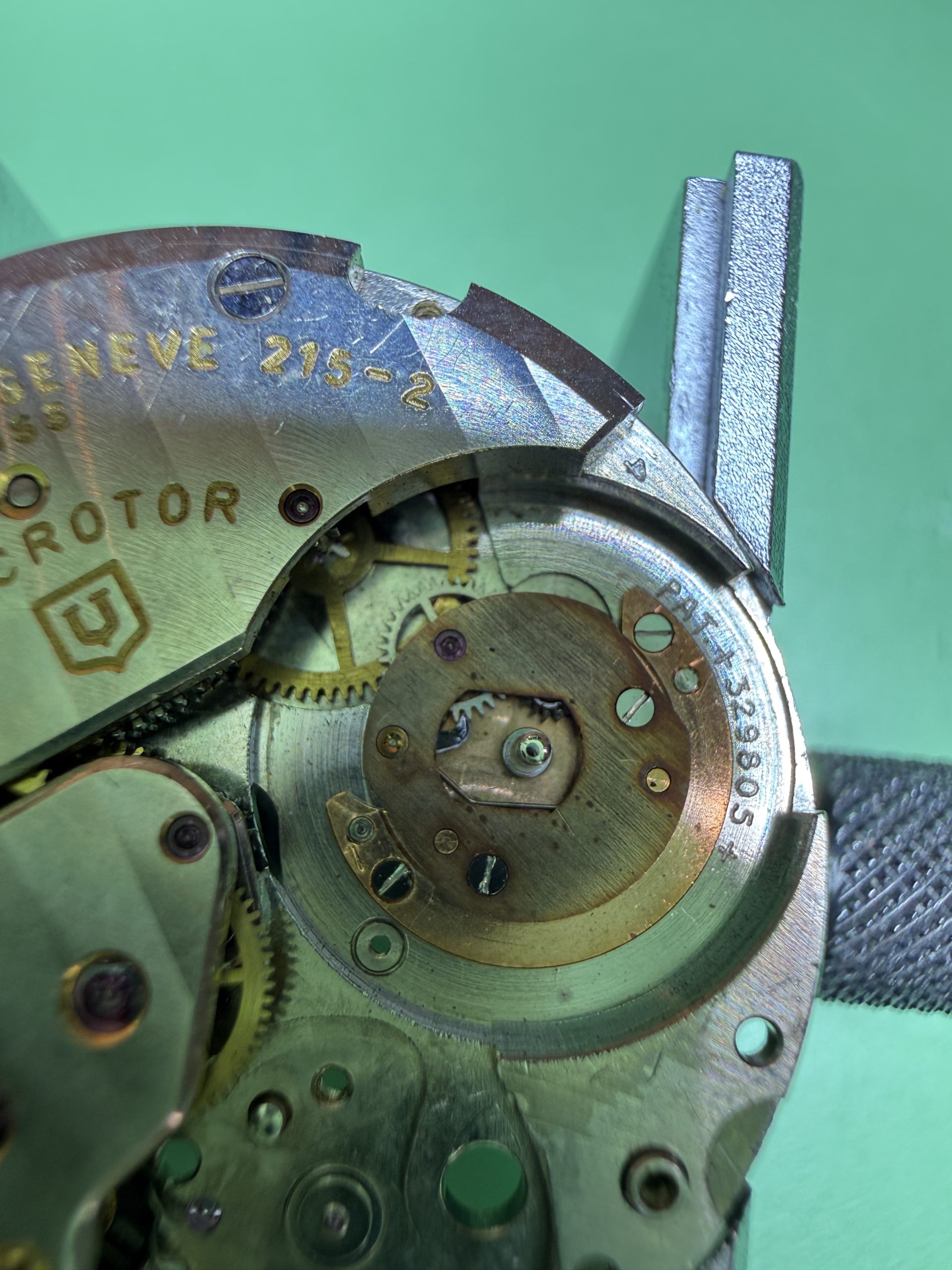
My own work: a Universal Genève with a micro-rotor, part of the automatic winding system.
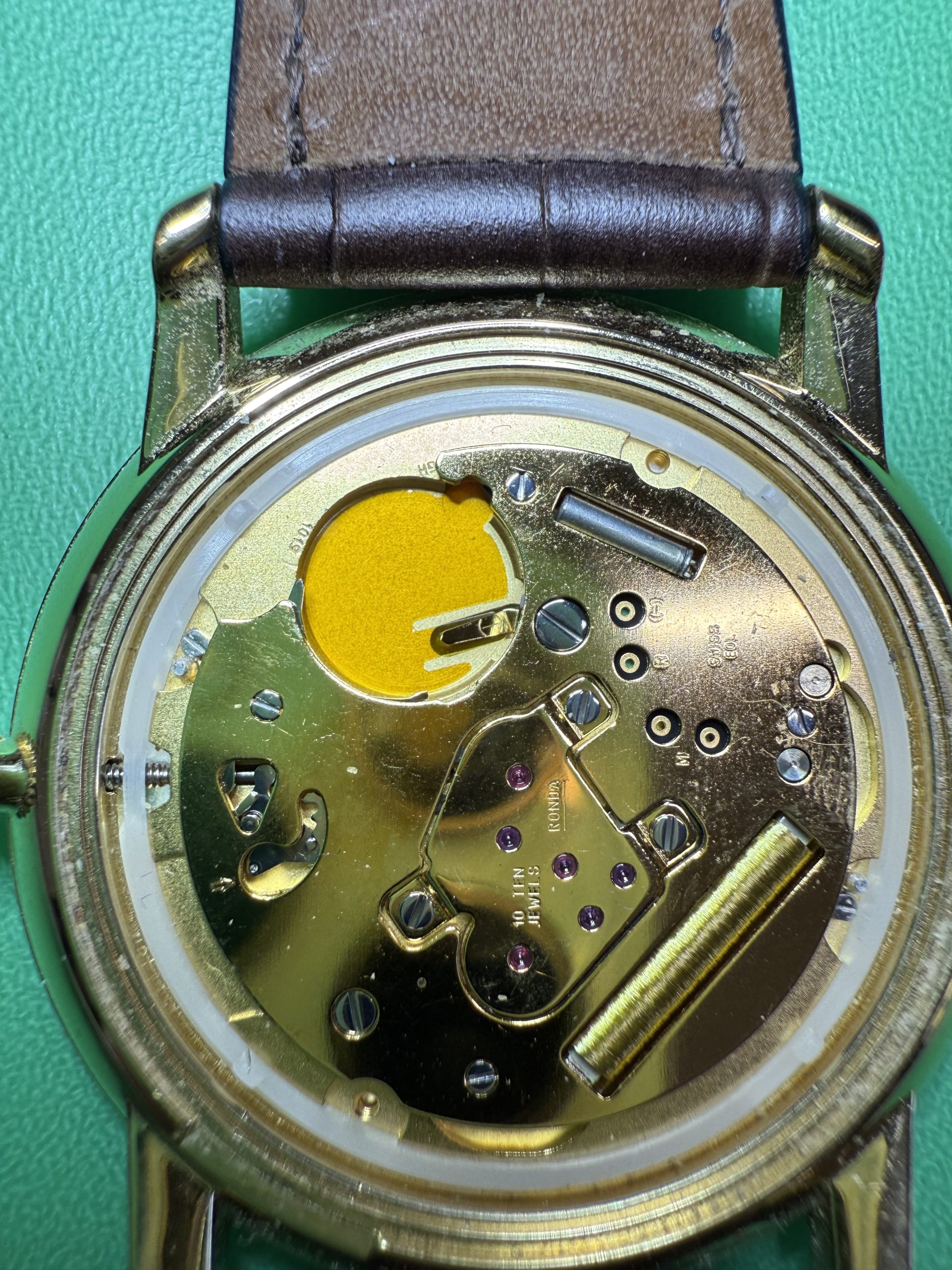
My own work: a quartz watch with its battery and movement visible.
Unusual and electronic movements
Not every watch fits neatly into the three main groups. Older electronics and hybrid designs can vary considerably.
Tuning-fork movement
An electronic circuit keeps a tiny tuning fork vibrating. A very fine drive mechanism transfers that motion to the hands. The familiar Bulova Accutron operates at 360 Hz; other tuning-fork calibres may use a different frequency.
Examples: Bulova Accutron Spaceview and Omega f300Hz with ESA 9162.
Electromechanical movement
This transitional technology combines electrical power with mechanical components. The drive system varies by design: in some versions, a balance receives electrical impulses. It is therefore different from a conventional quartz movement.
Examples: LIP Electronic, ESA Dynotron and Landeron 4750.
Solar quartz
A light cell converts light into electricity and charges an energy cell or another storage device. This powers the quartz movement. The condition of the energy storage and charging system matters when investigating a fault.
Examples: Citizen Eco-Drive and Seiko Solar.
Radio-controlled quartz
A quartz movement keeps time and also receives a radio signal to correct it. Reception depends on location, the signal and surrounding conditions. A reception fault and a movement fault do not necessarily require the same approach.
Examples: Casio Wave Ceptor and radio-controlled Citizen models.
Hybrid watch with smart features
This type combines conventional hands with electronics for features such as notifications, activity tracking or Bluetooth connectivity. Repair options depend heavily on the construction, software support and availability of modules.
Examples: Withings, Fossil Hybrid and Garmin Vivomove.
I always assess unusual movements in consultation first. The explanations on this page do not mean that every mentioned calibre or mechanism can be serviced at Othrys. The construction, technical condition and availability of parts determine what is possible.
The escapement: energy in small steps
In a mechanical movement, the escapement and balance regulate timekeeping. The escapement releases energy from the mainspring in measured amounts and keeps the balance oscillating.
Swiss lever escapement
With each swing of the balance, the pallet fork allows the escape wheel to advance a small step and gives the balance an impulse. This releases the mainspring’s energy in measured amounts. It is the usual escapement in many mechanical wristwatches and pocket watches.
Examples: Many mechanical calibres from makers including Rolex, Omega, Tissot and Seiko.
Co-Axial escapement
Developed by George Daniels, the Co-Axial escapement separates locking and impulse differently from the Swiss lever design. It reduces sliding friction. Servicing and adjustment require attention to the particular version of the calibre.
Examples: Various Omega Seamaster, De Ville and Speedmaster models with a Co-Axial calibre.
Dynapulse
Dynapulse uses a different construction to transfer energy to the balance. Two specially shaped distribution wheels work with an impulse rocker. Rolex introduced it in 2025 in the Land-Dweller’s automatic calibre 7135.
Examples: Rolex Land-Dweller, calibre 7135.
Cylinder escapement
In this historical design, the escape-wheel teeth interact with a hollow cylinder on the balance staff. It appears in older pocket watches. The original construction and existing wear strongly influence the performance that can still be achieved.
Examples: Historical French and Swiss pocket watches.
Verge escapement
A crown-shaped escape wheel gives impulses to the balance through two pallets on a verge. This is an early escapement design. Assessing such old movements requires respect for the historical construction and condition of the components.
Examples: Early English and Continental pocket watches.
Fusee and chain
A fine chain connects the barrel to a cone-shaped fusee. Its changing leverage helps compensate for the decreasing force of the mainspring. Fusee and chain regulate the driving force; they are not a separate type of escapement.
Examples: Historical pocket watches and some marine chronometers.
I always assess unusual movements in consultation first. The explanations on this page do not mean that every mentioned calibre or mechanism can be serviced at Othrys. The construction, technical condition and availability of parts determine what is possible.
Complications: beyond hours and minutes
A complication is an additional function beyond ordinary timekeeping. A date window is one example, as are a stopwatch, moon phase or striking work. These functions add components and interactions to the movement.
Date and day
A calendar mechanism generally advances a date disc once a day. A day-date movement also displays the weekday. Correct operation and the changeover timing depend on the calibre.
Examples: Seiko 5, ETA 2836 and many Omega and Longines movements.
Chronograph
A chronograph adds a stopwatch function to the normal time display. Pushers start, stop and reset the measurement. Additional wheels, levers and couplings make the movement more complex and add checks during servicing.
Examples: Omega Speedmaster, Valjoux/ETA 7750 and older Landeron and Venus calibres.
Moon phase
A disc beneath the dial displays the phase of the moon. The movement advances it at regular intervals. Display accuracy and the setting procedure vary with the design.
Examples: Moon-phase versions from makers including Longines, Omega and Blancpain.
Power-reserve indicator
This indicator shows approximately how much energy is stored in the mainspring. A mechanism compares winding and unwinding and converts this into a hand position or another display.
Examples: Some Seiko and Orient Star calibres and various Swiss movements.
Jump hour
Instead of moving gradually, an hour hand or disc jumps to the next position once an hour. The mechanism first stores energy and then releases it at the right moment.
Examples: Vintage disc-display watches and unusual modern designs.
Retrograde display
A hand travels along an arc and jumps back to the start at the end. This can be used for a date or seconds display, for example. The return requires a precisely coordinated mechanism.
Examples: Some Breguet and Longines models and designs by independent makers.
Perpetual calendar
This calendar mechanism accounts for different month lengths and leap years. It combines several interacting calendar functions. Operation, correction and servicing depend on the particular calibre.
Examples: Complicated calibres from makers including Patek Philippe and Audemars Piguet.
Minute repeater and striking work
Striking work sounds the time using small hammers and gongs or bells. A minute repeater can sound hours, quarters and minutes on demand. Other striking mechanisms sound automatically at set times. These are specialist mechanisms.
Examples: Historical pocket watches and exceptional modern movements.
Tourbillon
In a tourbillon, the balance and escapement rotate in a cage. The design was developed to average certain position-related errors. It is a complex mechanical solution that requires an individual technical assessment.
Examples: Exceptional movements from makers including Breguet and Jaeger-LeCoultre.
I always assess unusual movements in consultation first. The explanations on this page do not mean that every mentioned calibre or mechanism can be serviced at Othrys. The construction, technical condition and availability of parts determine what is possible.
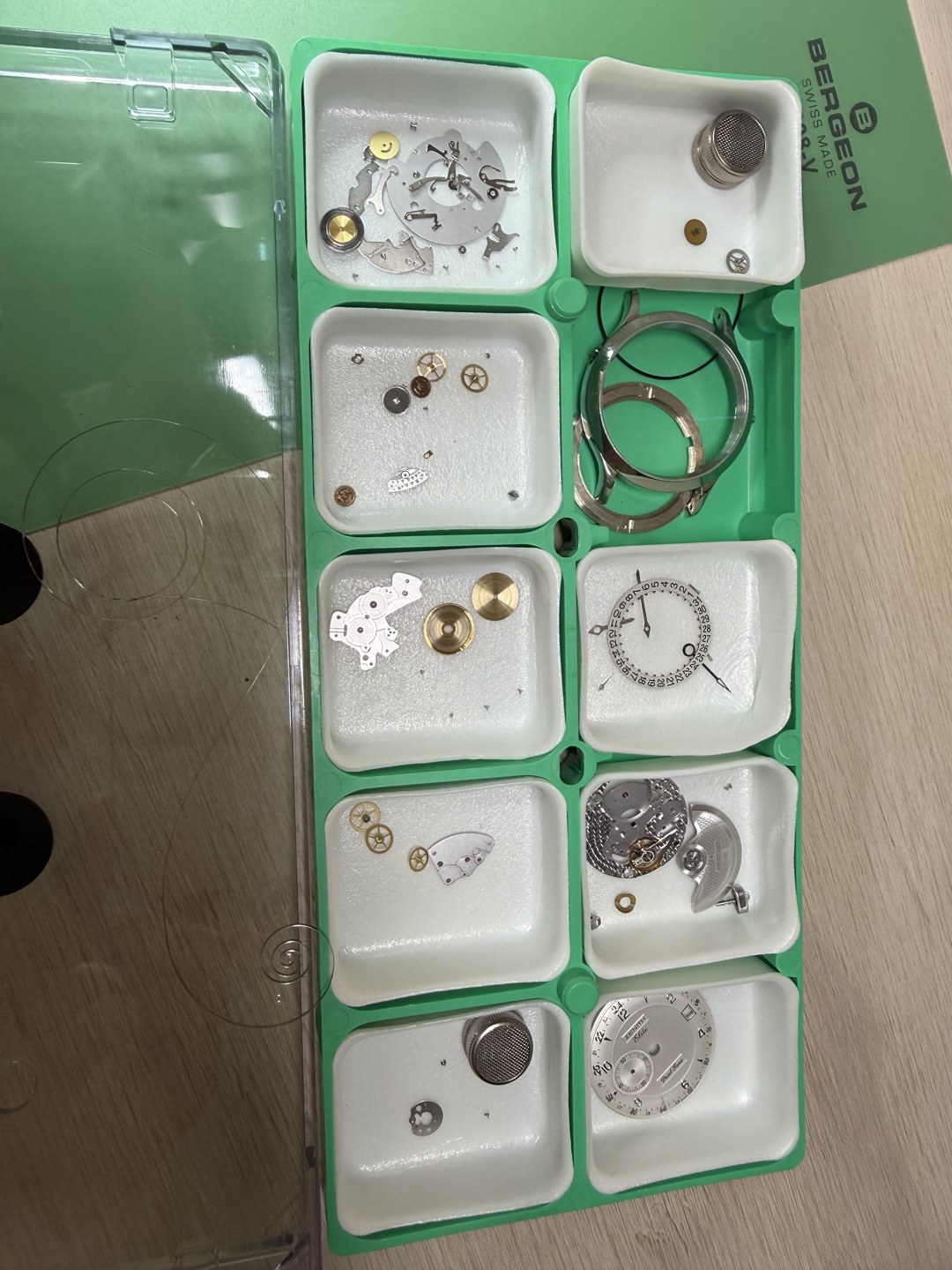
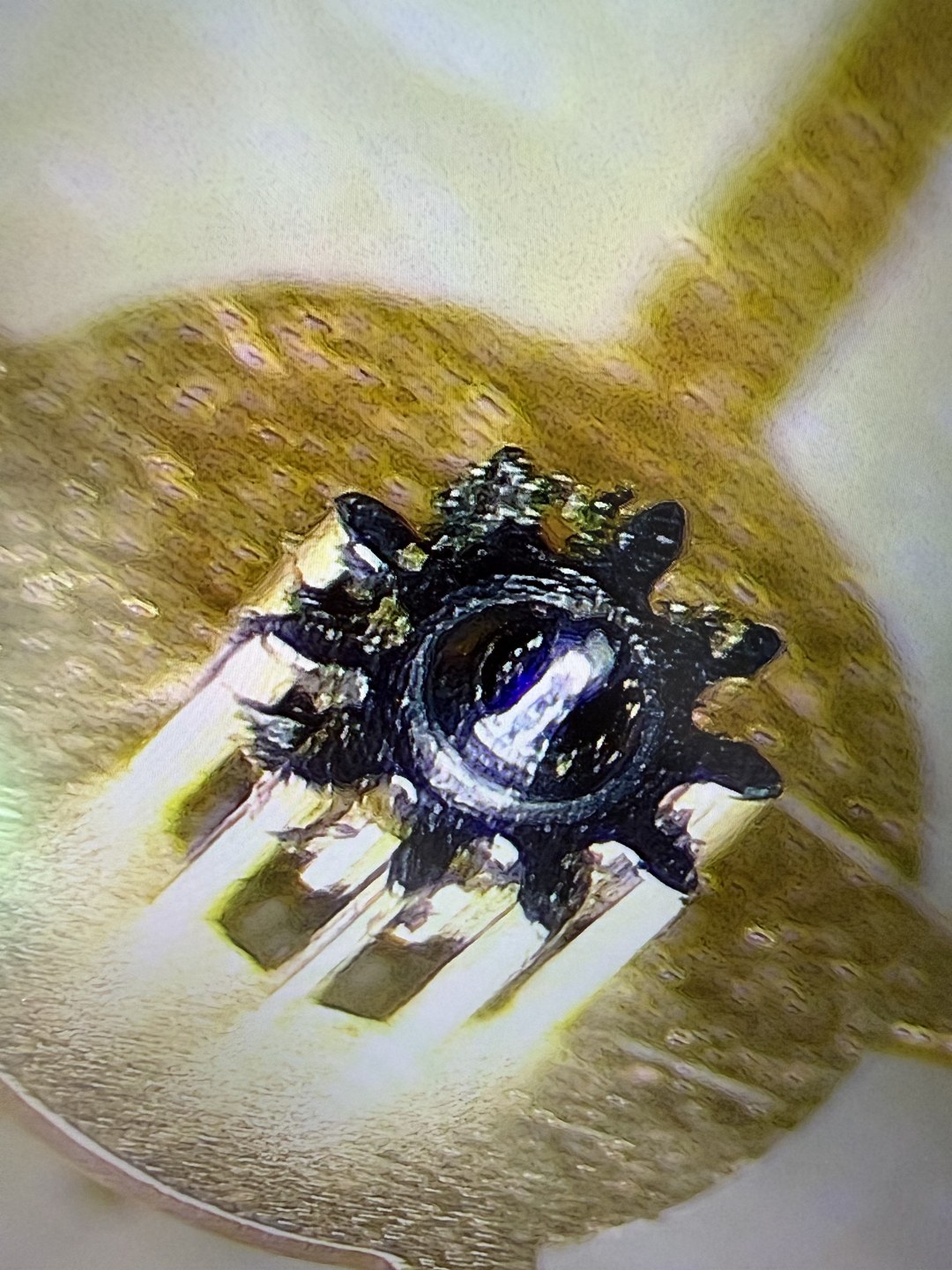
Making the mechanism visible
A movement contains many interacting components. Photos from my own workshop show what is hidden beneath the dial.
What does this mean for your watch?
The name on the dial does not tell the whole story. The calibre, age and condition help determine the right approach. If you have a question about your watch’s mechanism or servicing, include the brand and model so we can discuss the options.